

Home Care Smart Hub
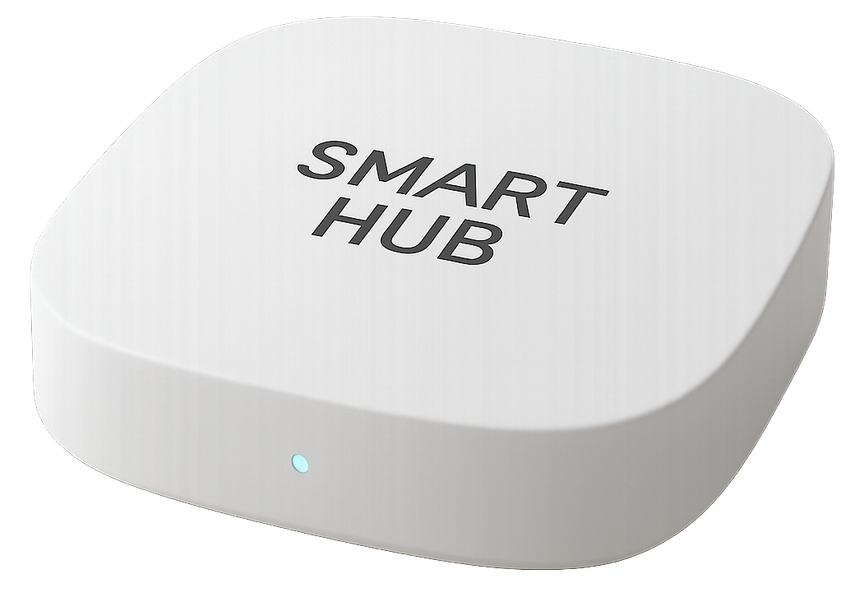
A look into how Avco Systems helped build and develop a smart hub for the care industry to help monitor and interact with vulnerable people in their homes. This project had a particular focus on hardware integration, speed of delivery and collaboration across varying industries to produce a successful outcome.
The Problem
In 2017, the UK announced its intention to switch off all analogue telephone networks, including the Public Switched Telephone Network (PSTN) used for traditional copper-wire phone calls. However, many hardware devices used in the care sector for assisted living still rely on this analogue infrastructure. Devices such as fall detectors, motion sensors, and emergency alarms often contact an Alarm Receiving Centre (ARC) directly via telephone, where decisions are made about how best to assist the service-user. This service is critical to a service-user’s care, and the response time can be a life-or-death matter.
With the analogue switch-off approaching, a solution was required to help care providers transition their existing devices—built on a mix of technologies such as Zigbee, Bluetooth, and others—onto a modern digital platform.
Avco Systems were approached by a company seeking to scale their existing proof-of-concept solution. The hardware and technology stack in use at the time were not sustainable at scale, so Avco was brought in to collaborate with low-level hardware designers to develop a bespoke smart hub, scalable cloud services, and simplified support for the range of external devices installed in service-users’ homes.
The Approach
Avco prides itself on working closely with key business stakeholders and end-users throughout the entire product development lifecycle. We collaborate at every stage—proposing new ideas, suggesting suitable technologies, and refining ways of working—to ensure the best possible outcomes for the project.
To develop the smart hub, Avco worked with the business and the original prototype developers to assess the existing firmware. It quickly became clear that it needed re-engineering to make the best use of the available hardware. We selected languages and technologies optimised for embedded devices while still supporting rapid development. Avco also collaborated closely with hardware engineers to ensure the correct integration of speakers, batteries, and a wide range of peripherals through extensive prototyping. This included developing the firmware to communicate with zigbee, lora and RF868 devices.
A dedicated development pipeline was established to support the addition of new external devices such as temperature sensors, motion sensors, fall detectors, and many more. Alongside smart hub development, two further workstreams progressed in parallel: the build-out of the cloud services infrastructure and the enhancement of the web portal.
For the hub, we developed a custom operating system based on yocto, a Linux distribution designed for embedded devices. This tailored approach allowed us to optimize hardware performance while delivering a robust, reliable, and secure solution. As a result, the system successfully passed independent third-party security testing.
The cloud services were required to support thousands of smart hubs connecting simultaneously, processing data from external devices in near real-time. Due to the critical nature of the service, notification latency needed to be kept to an absolute minimum to ensure the best care for service-users. Avco selected AWS and implemented a scalable, serverless architecture. This approach minimised ongoing maintenance costs while targeting near-100% uptime across multiple availability zones. As hub volumes and data throughput have grown, the platform has continued to scale without issue.
The web portal used to manage and monitor the hubs was originally built using Microsoft C# and React. Avco were asked to take over support, maintenance, and hosting of the system. Since then, we have significantly expanded and enhanced the portal, delivering features at pace. The system is now fully featured and in active use by many care providers across the UK to manage their fleets of smart hubs.
The Result
Thanks to Avco’s rapid and collaborative development approach, the customer has been able to focus on scaling production and growing sales of their smart hubs. New customers continue to be onboarded, and support for external devices is expanding, enabling care providers to offer a higher standard of assistance to service-users.

Certifications

Registered in England No. 1976620 v10.4.0-rc2:508abf88 - 2026-02-15